About Scenescape
A place to look again.
Most of us move through a world shaped by stories and ideas that influence us, both consciously and unconsciously. They color what we admire, what we fear, how we understand work, and what we believe a meaningful life is supposed to look like. Sometimes we quote Shakespeare without knowing it. Sometimes an old television character gives us a better model of courage than the latest cultural manifesto. Sometimes the ordinary systems surrounding us reveal what we actually value.
Scenescape Media is an independent journal about those connections; the ones between what we read, watch, use, believe, and experience.
This is not primarily a review site, a personal diary, or a collection of definitive answers. I don’t assign stars or ratings. I ask why a story stays with us. I’m not going to summarize what a great thinker said when it’s more interesting to notice how those ideas still move through contemporary life.
Scenescape explores and questions along two related themes.
Scenescape
Most Scenescape essays will gather around a couple of main themes, but there’s always room for ideas that refuse to stay in their assigned drawer. Most essays begin with an idea, object, technology, system, or cultural pattern that invites a closer look. Scenescape explores the unexpected connections threaded through ordinary life: what our tools and institutions reveal, how inherited beliefs persist, and what becomes visible when we stop taking the familiar for granted.
The Sixth Act
I’m in a season of life where I frequently think about reinvention, creativity, aging, and the continuing business of becoming. Here you’ll find essays about choices we make and changes we didn’t choose; returning to interests we set aside; learning something new when we are no longer beginners at life; and discovering which parts of an earlier chapter are worth carrying forward.
Wide Open Stories
I’ve always enjoyed conversations about books, film, television, characters, cultural inheritance, and the stories through which we understand ourselves. Expect rereads and rewatches, unexpected connections, neglected characters, familiar ideas seen from a different angle, and occasional questions about what our entertainment is quietly teaching us.
Stories affect the way we live, and experience changes the stories we are able to see.
Faith in Practice
Every day I think about how to live out my Christian faith in ordinary circumstances: at work, at home, in relationships, and in choices don’t look all that special from the outside. I’m interested in what Scripture asks of us when life is boring, when it gets complicated, how belief shapes action, and the questions worth sitting with rather than rushing to answer.
The Working Life
Unfiltered essays about work as people actually experience it: the systems that help or hinder us, the habits we mistake for necessities, and the kind of leadership that makes good work possible within a human life. Expect questions about meetings, productivity, technology, burnout, and workplace culture, without pretending every problem can be solved by waking up earlier. And this is not hustle culture dressed in more tasteful clothing. It is an exploration of how we might work and live with greater purpose, humanity, and imagination - particularly when we’ve realized that time matters.
Images: One Impossible Thing
The images here follow a simple idea: a familiar world with one impossible thing in it. A clock rises over the mountains. A torn life plan becomes a network of roads. Me in the engineering room of the Enterprise. A theater program keeps adding acts long after it’s run out of paper. Reality, with a little room to misbehave.
I use the ChatGPT Images feature to create these pencil-style illustrations — sometimes beginning with my own photographs — and refine them around the idea I want to explore. The sketch style is deliberate: visible lines, unfinished edges, a few touches of color. I like the sense that something is still taking shape, that there’s room for another thought.
And since I find drawing stick figures challenging, this methodology makes sense.
AI gives me a way to experiment with those visual connections. The “one impossible thing” gives that experimentation a purpose. It’s a small invitation to look again, question what seems settled, and imagine what else might be possible. That’s much of what I’m doing with the words here, too.
About Susan
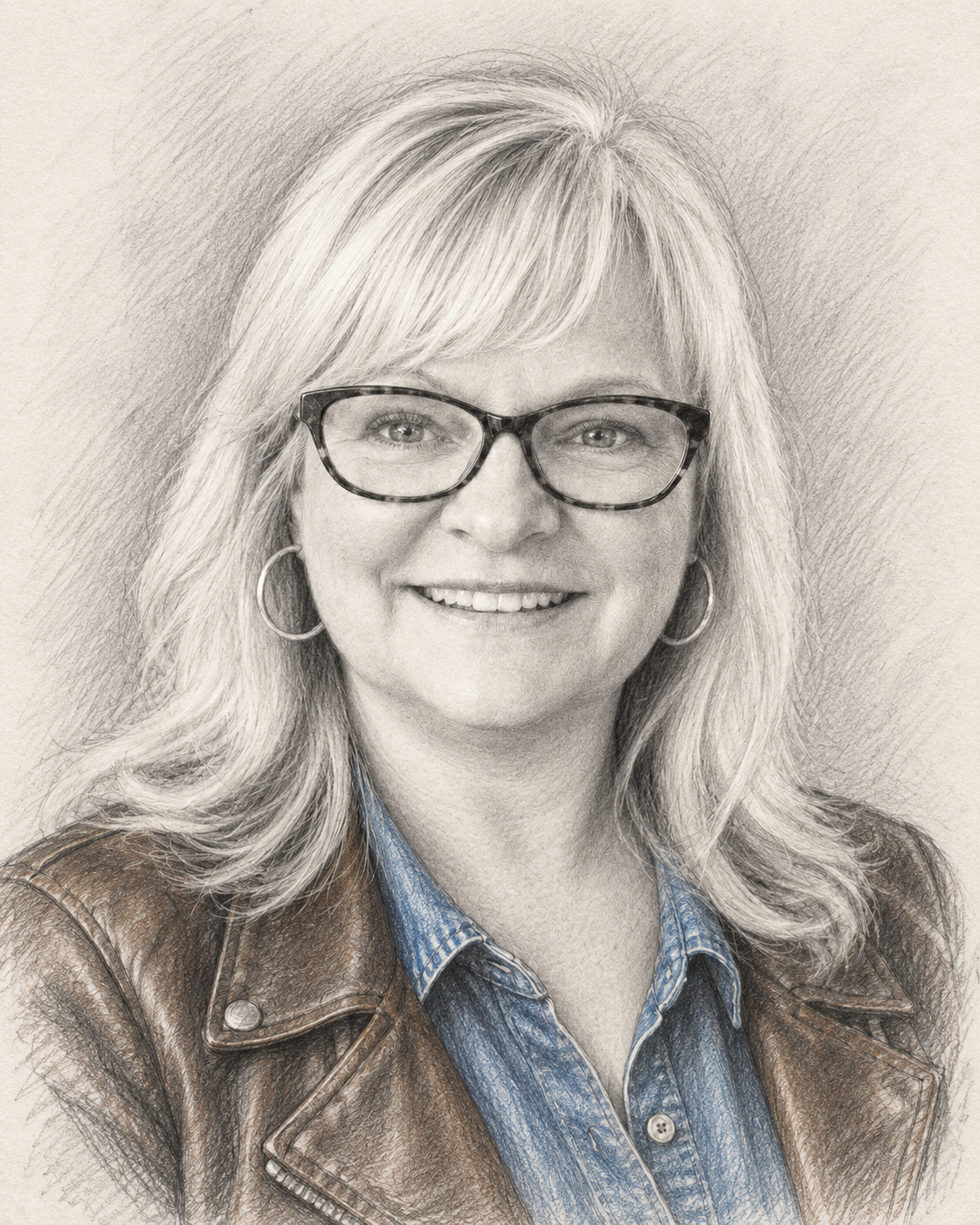
I’m Susan Marie Newman, a writer, voracious reader, and operations and organizational development professional. My interests have never respected departmental boundaries. They wander through literature, film, psychology, culture, faith, technology, work, leadership, and the peculiar ways human beings construct meaning from all of it.
That untidy combination is useful here.
I write from experience, but Scenescape is not a public excavation of every part of my life. I share what is mine to share and protect what belongs to others. When I write about marriage, motherhood, friendship, or other relationships, I’m interested in the questions and patterns they bring into view. I draw a boundary where I do not want to be responsible for publishing someone else’s private story. An essay may begin with my own experience, a story I’ve read, or an observation that stayed with me. Where I use a real-life example, I may change or omit identifying details; if the story would still be recognizable, I may leave it untold.
And when I write about work, I’ll be focusing on ideas, patterns, systems, and my own obsession with getting things done—not about my employer or colleagues.
Scenescape is a working notebook for curious grown-ups: thoughtful but not solemn, personal but not confessional, intelligent without requiring anyone to sit an entrance examination.
Come in. Look again.